
The Journey of a Veggie
How does a Featherstone head of romaine lettuce get from our farm to your kitchen? Let’s follow the journey of a veggie.
There’s lots of work and planning that takes place through the winter months at Featherstone. We plan out our fields, make a crop plan, inventory all of our seed, and order more. This process takes months, and by spring we are prepared to begin seeding.
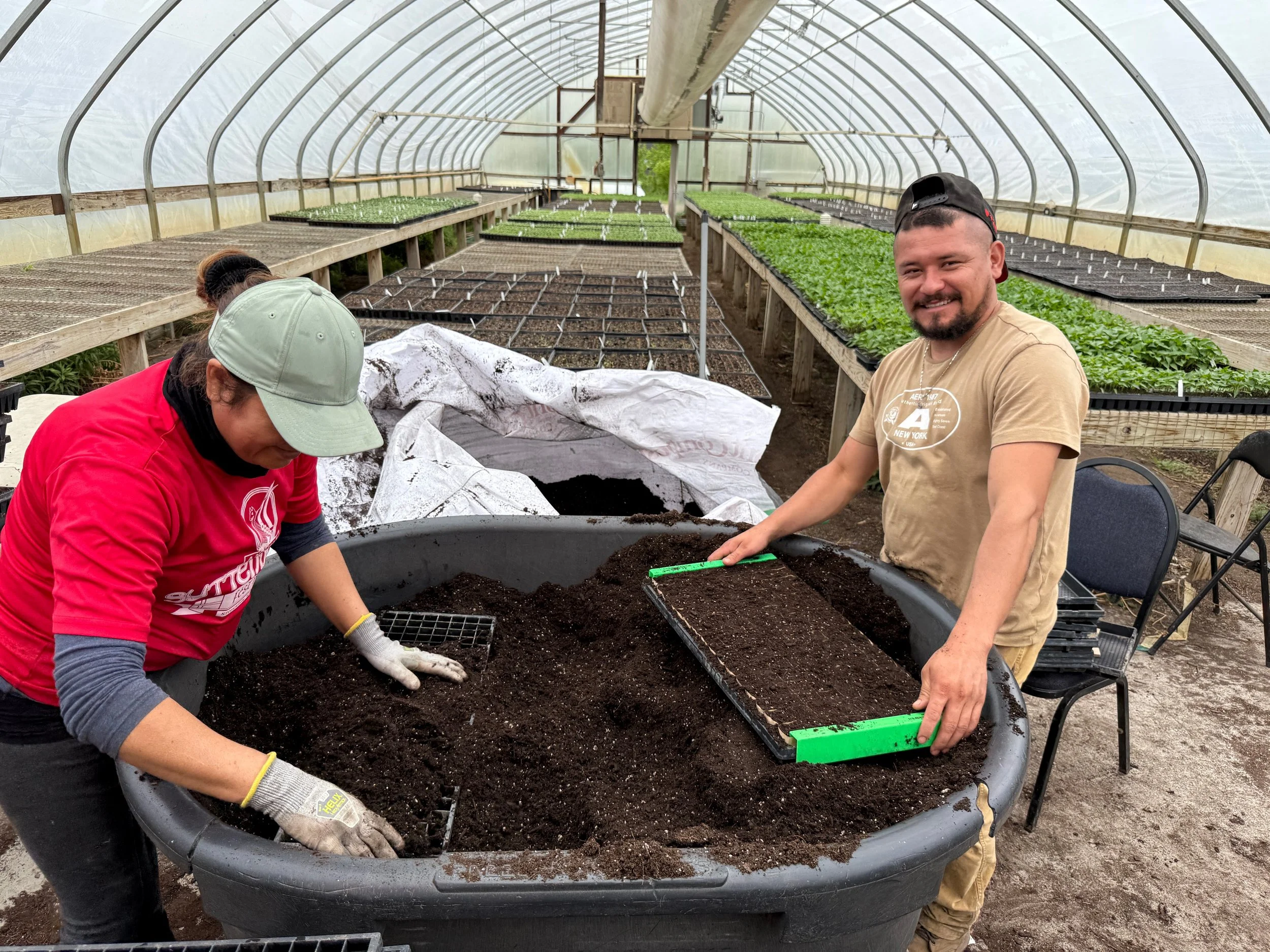
Once the weather is warm enough (or, more realistically, once the calendar says the weather should be warm enough), we start the process of seeding by filling trays with organic potting soil.
Here, Veronica and Blusitas are filling two different types of trays. We use different tray types for different crops, taking into account how large a seedling should grow before we are able to plant it, how deep the roots of that particular plant grow, and how many seedlings of that crop we are trying to grow.
We seed our romaine lettuce into trays that hold 144 baby plants.
For a crop like tomatoes, we seed into trays that hold 72 plants, which allows for more space and larger plants per tray.
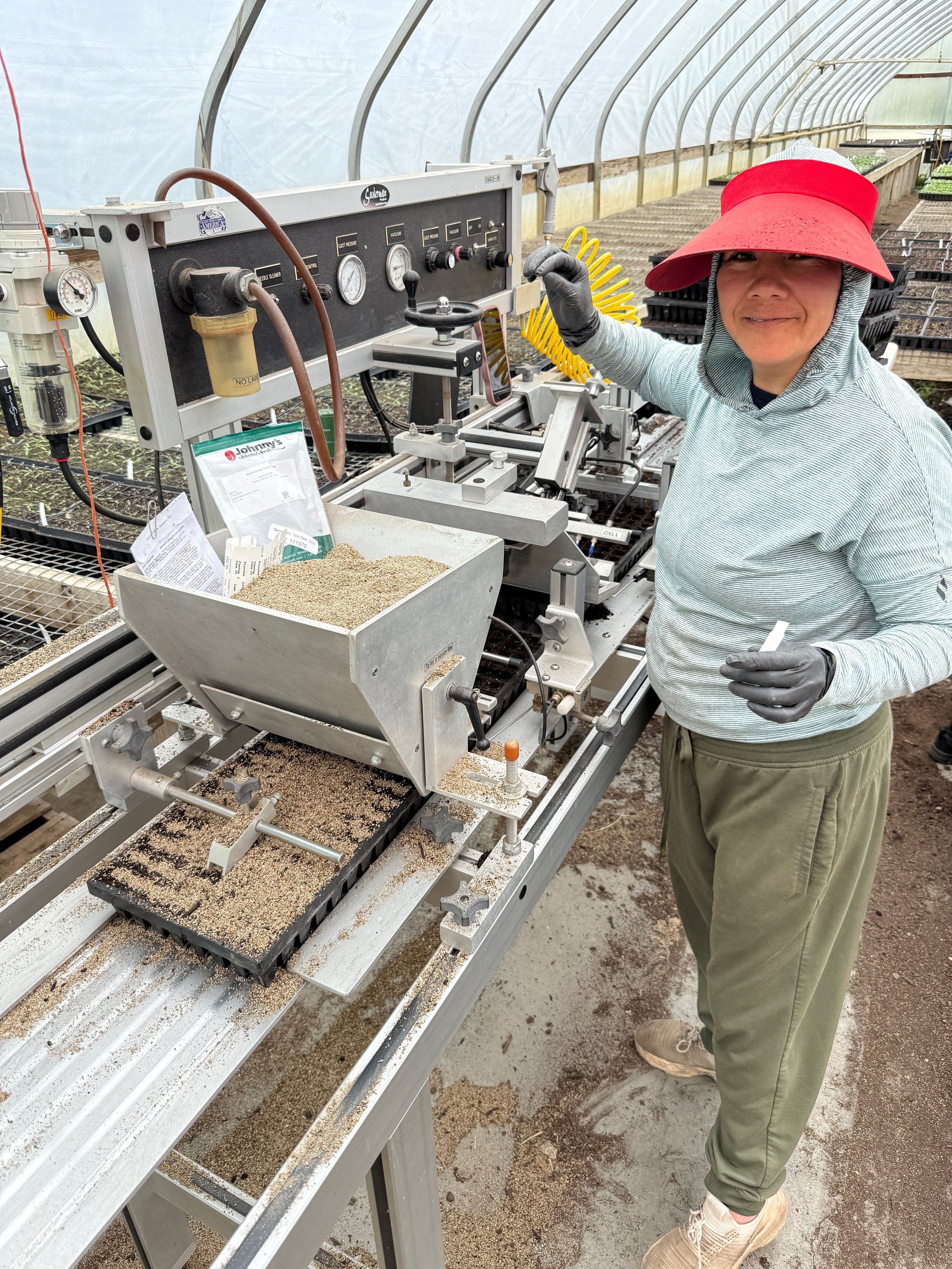
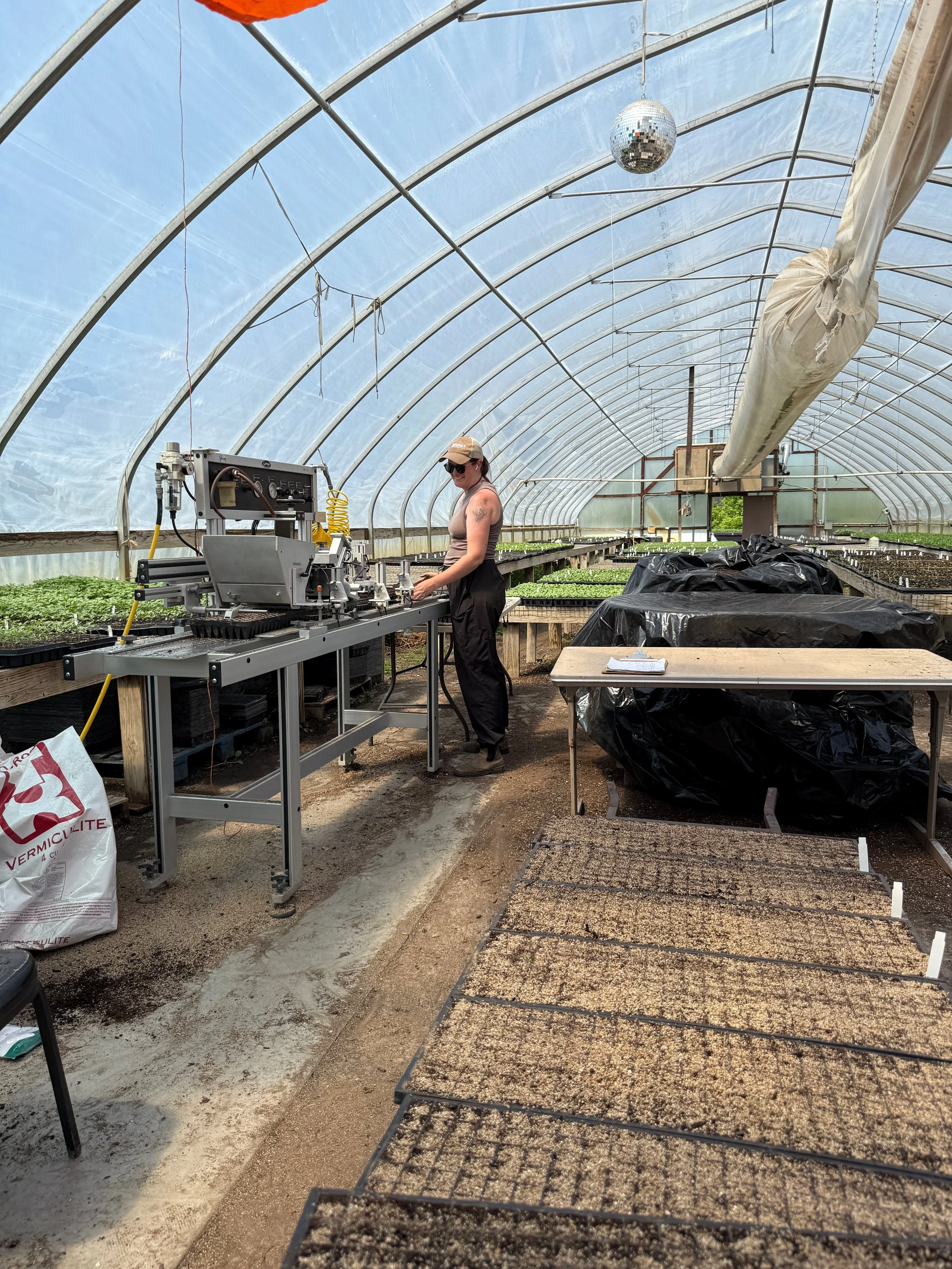
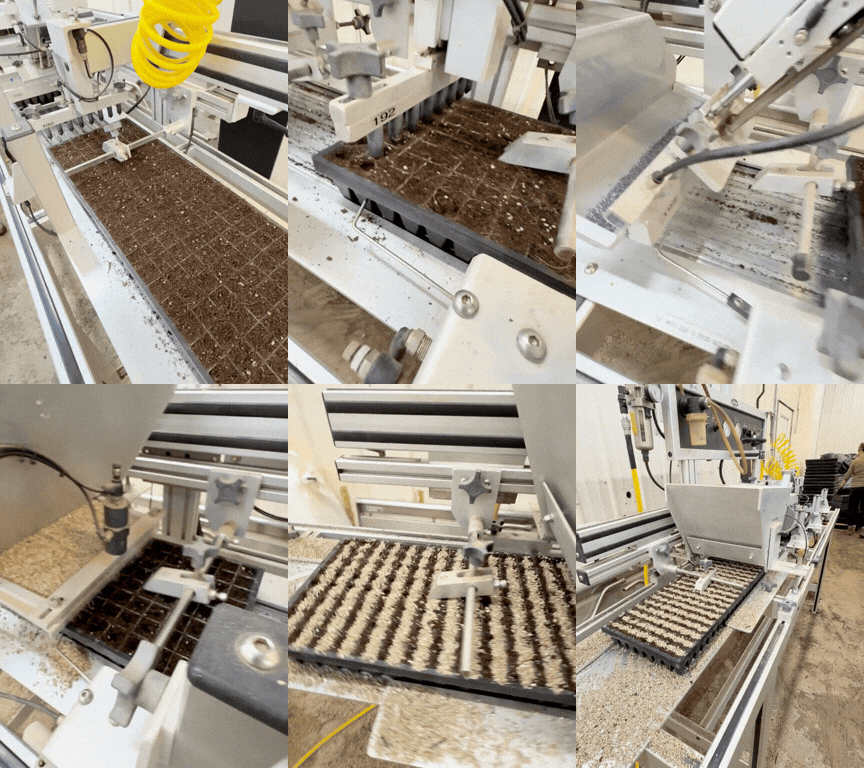
Once the trays are full, we send them through “Lola,” our trusty needle seeder. This machine presses a small hole into the soil, drops a seed into the hole, and covers the hole with vermiculite. The trays are automatically pushed through while Ofelia or Molly monitor the seed and vermiculite levels, and pull the seeded trays out to be watered.
Once the seeds are tucked into their trays, we patiently wait for them to germinate. After they’ve sprouted, they spend some time in our warm greenhouse, where they’re diligently watered and monitored until they are big enough to be moved outside (or we run out of inside space in our greenhouse!). We let our seedlings get used to the outside world before we plant them by moving all our seedlings to trailers that can be moved into a covered tunnel in the event of cool weather or heavy rain.
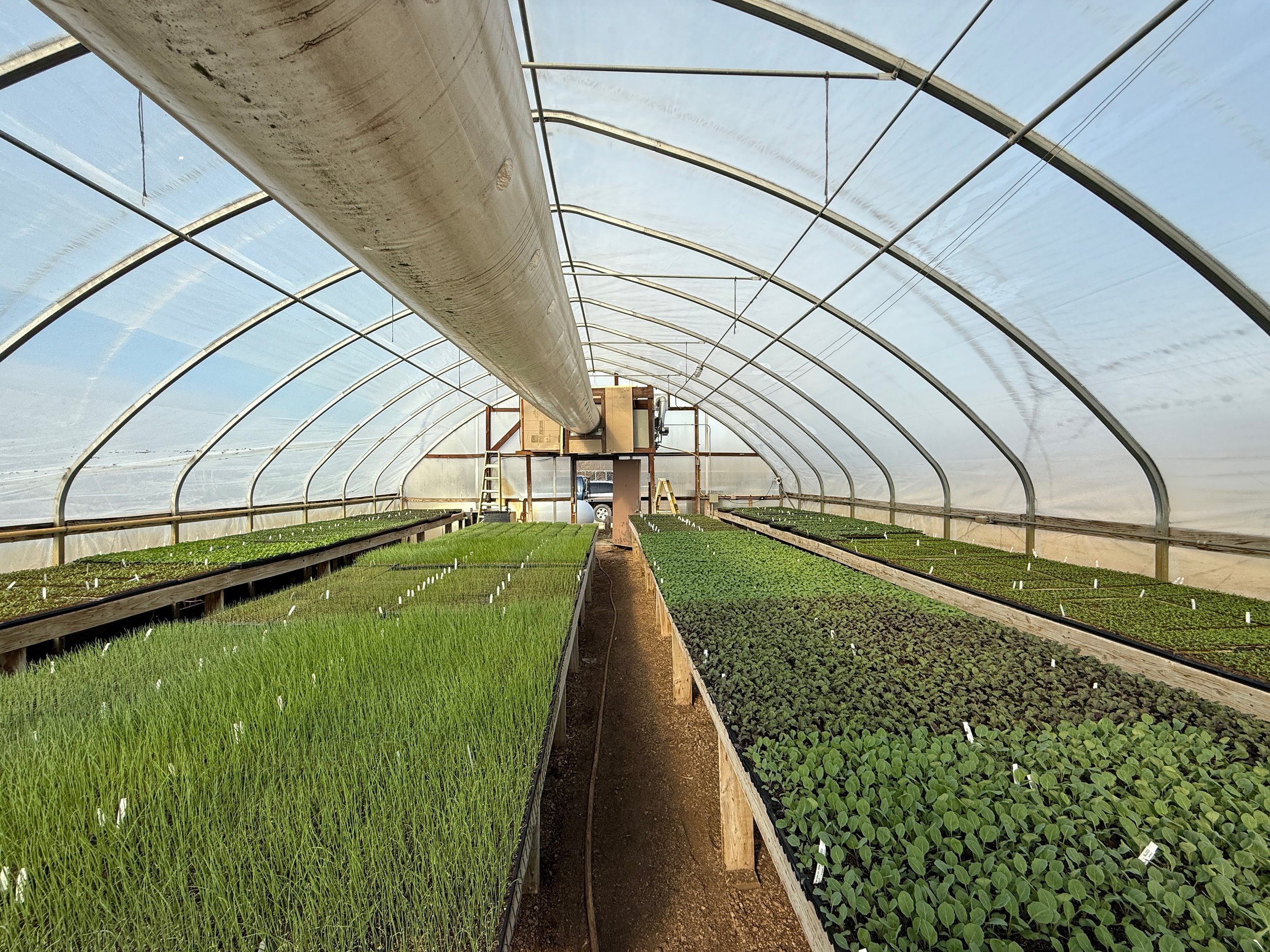
The green house changes daily, with seedlings growing quickly, new trays being brought in and mature plants moving outside to acclimate.
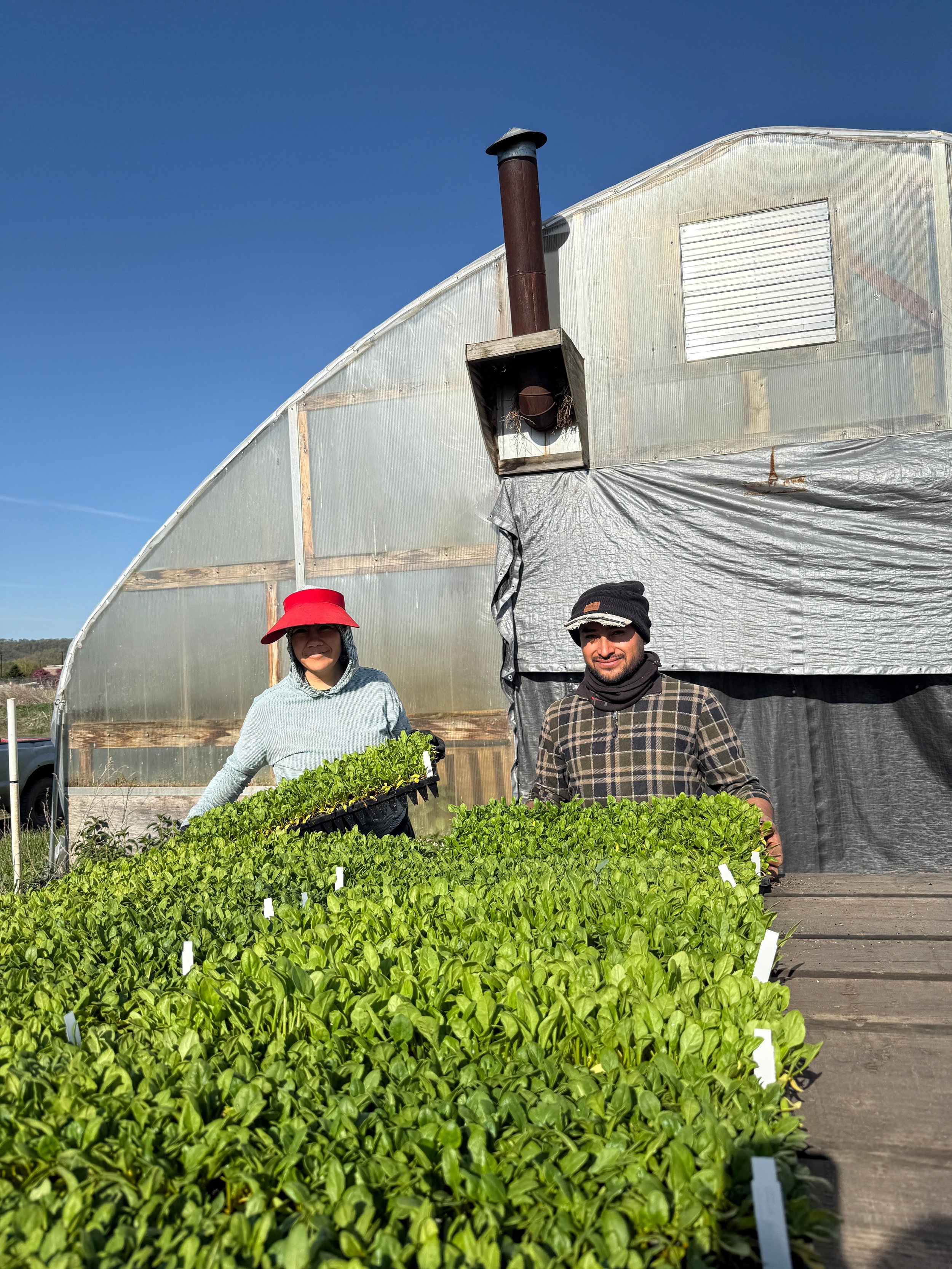
Ofelia and Jose move trays from the greenhouse to a trailer outside.
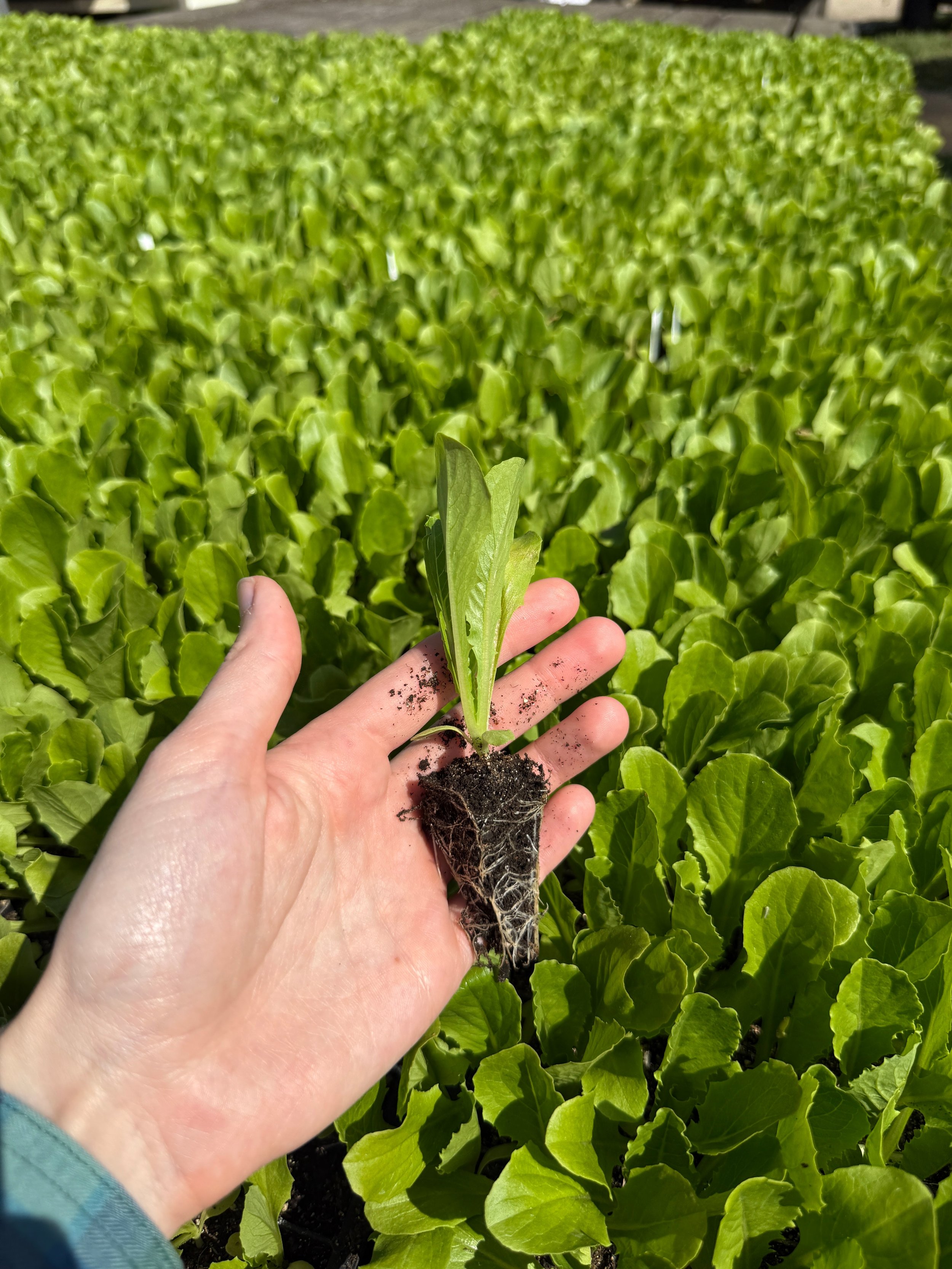
Once a seedling reaches the perfect size, we plant them out in the field according to our crop plan, which takes into account crop rotation, our ability to irrigate a certain field, and how close that crop needs to be to a harvest road for harvesting onto a wagon.
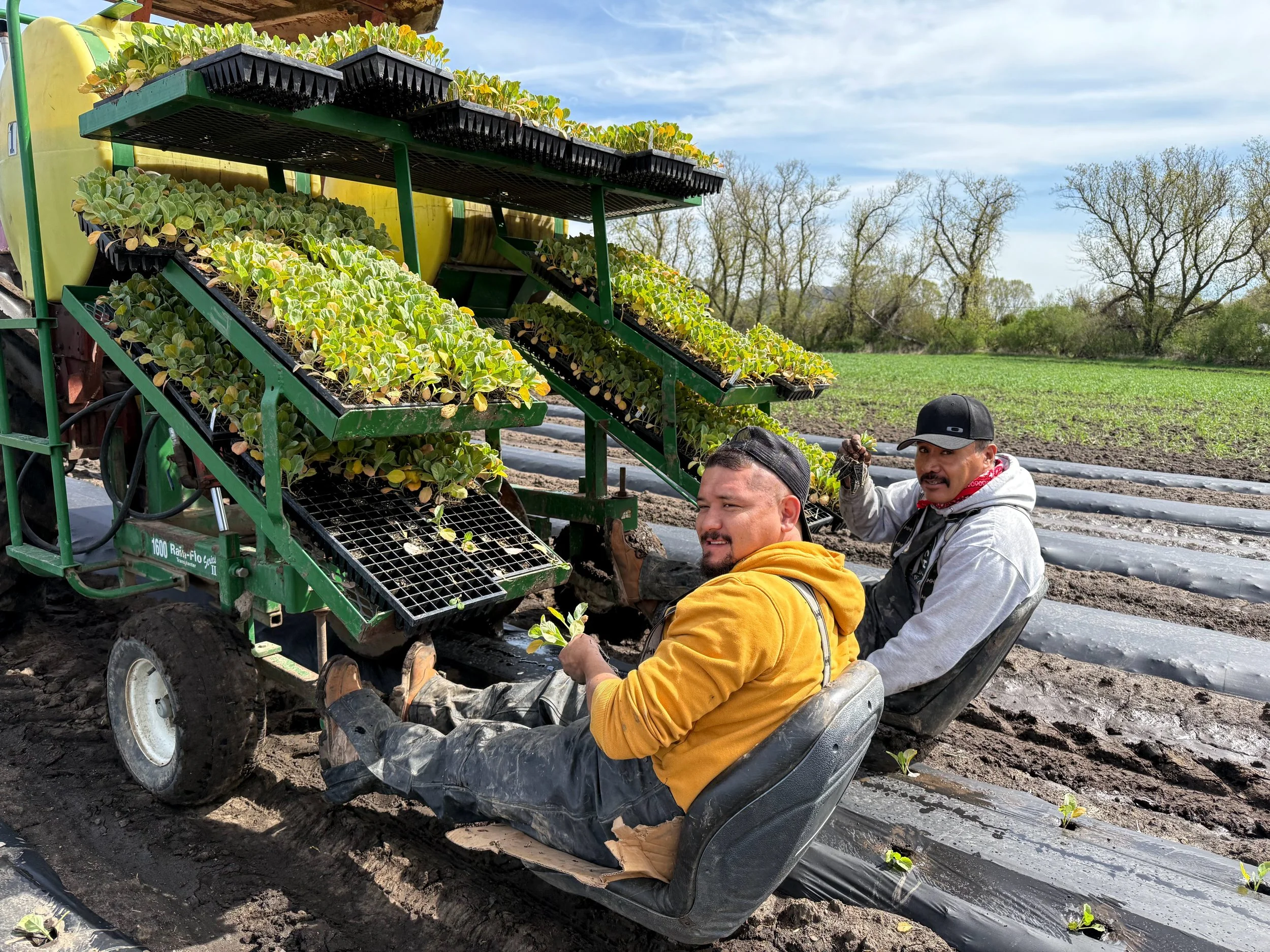
Blusitas and Mote ride the waterwheel transplanter, sticking baby plants in the ground by hand as the tractor punches holes in the soil and waters the plants.
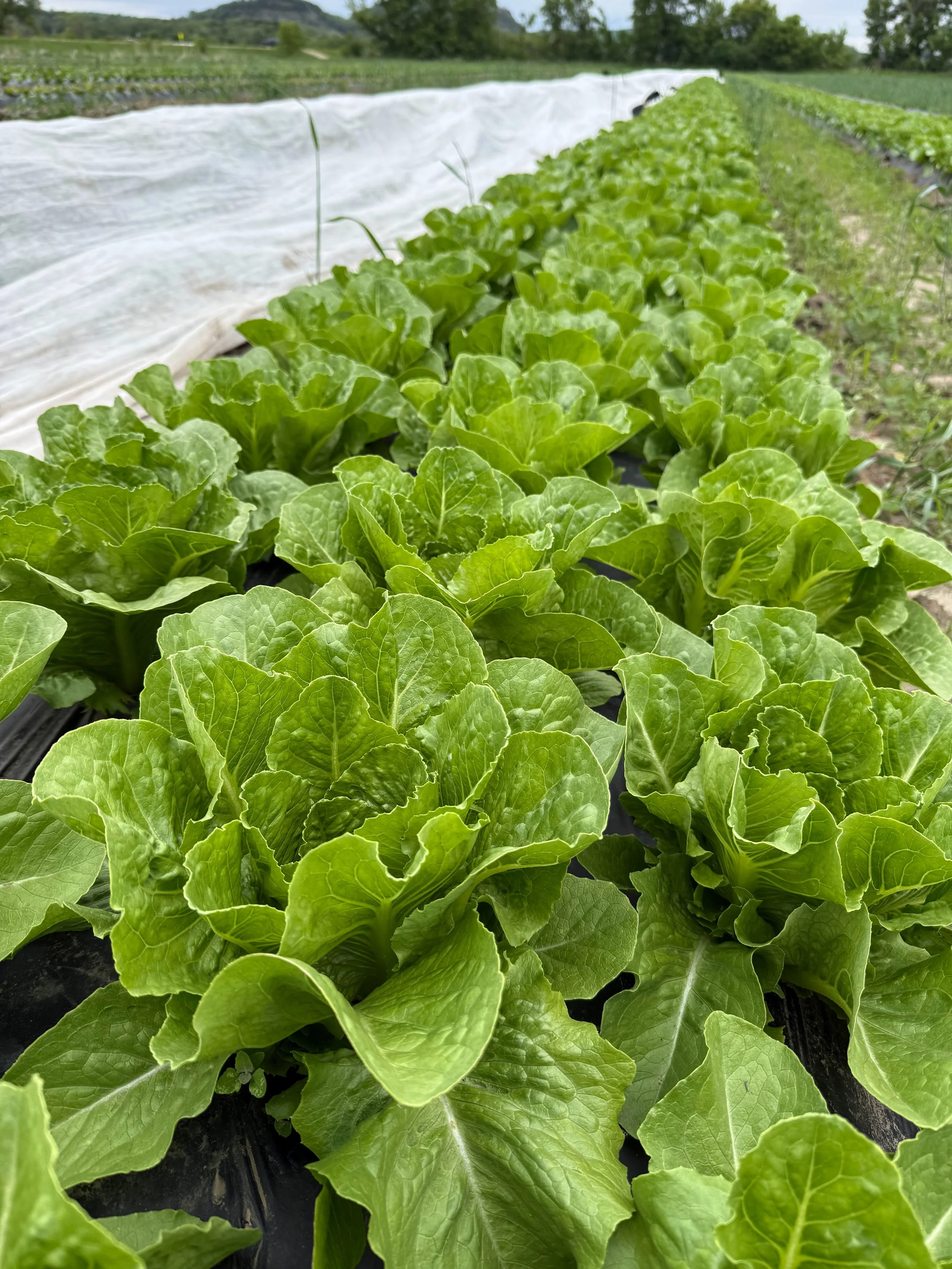
Once seedlings are planted, we wait. A head of romaine takes about 50 days to reach a harvestable size. During this time we irrigate, manage weeds, and monitor for pests. Once mature, we harvest lettuce heads in the early morning, when the temperatures are cooler, to ensure a quality crop makes it to the cooler. We generally harvest a crop no more than 3 days before it is sent to a store or packed in a CSA box, with some crops being harvested just 24 hours before they’re sent out!
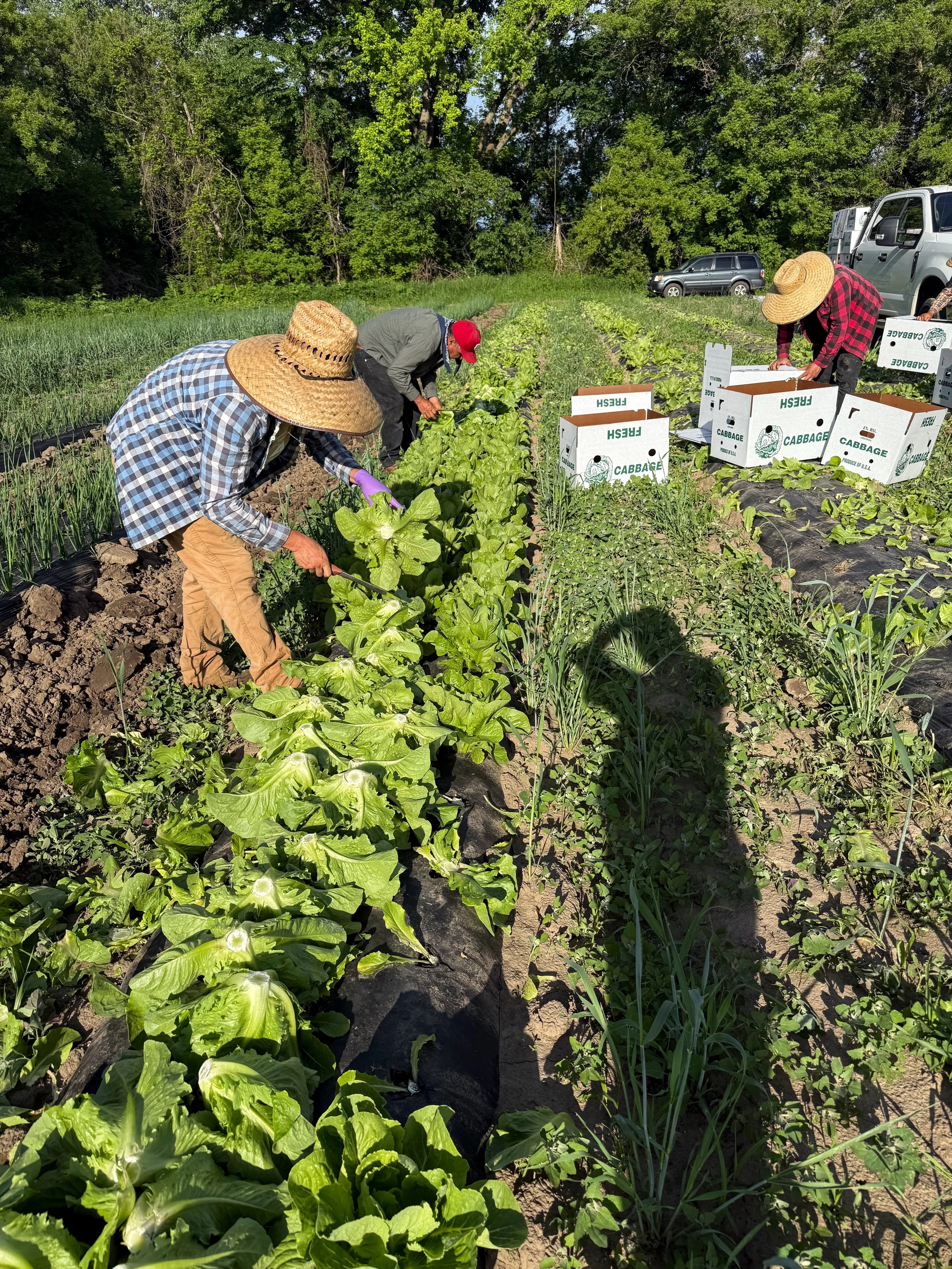
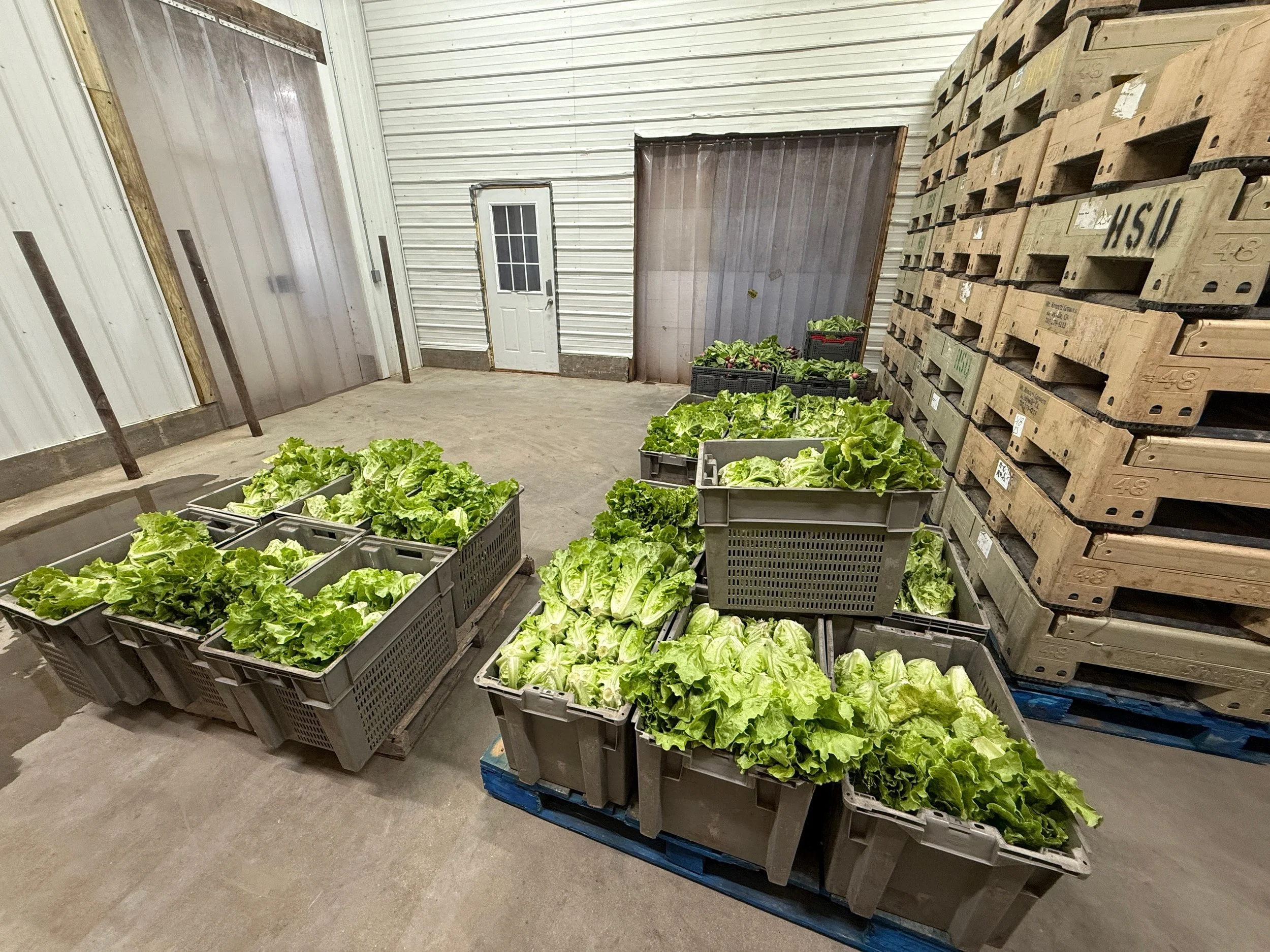
Wholesale lettuce is packed directly into boxes in the field, while CSA heads are brought into the cooler in reusable crates. This particular cooler also regulates humidity, eliminating the need to bag or cover fresh produce.
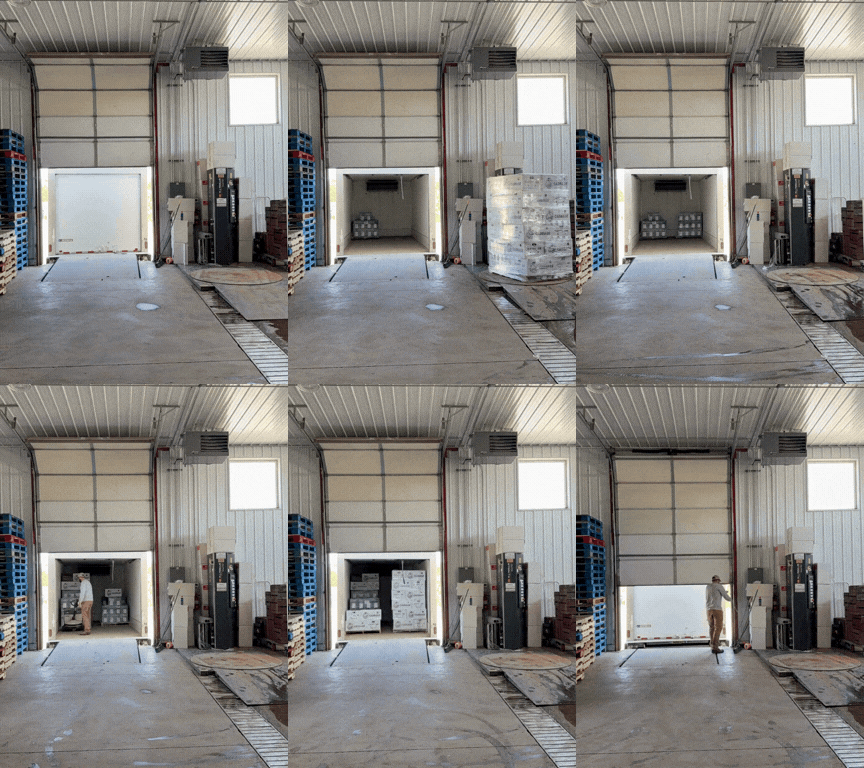
Packed boxes of wholesale lettuce are sorted onto pallets depending on their final destination along with any other wholesale veggies a store has purchased. CSA lettuce is packed by hand into our green crop boxes, stacked onto a pallet and loaded into our delivery truck by one of our drivers. Boxes are then delivered to their designated destination for produce departments to put on display, or CSA members to pick-up and take home!
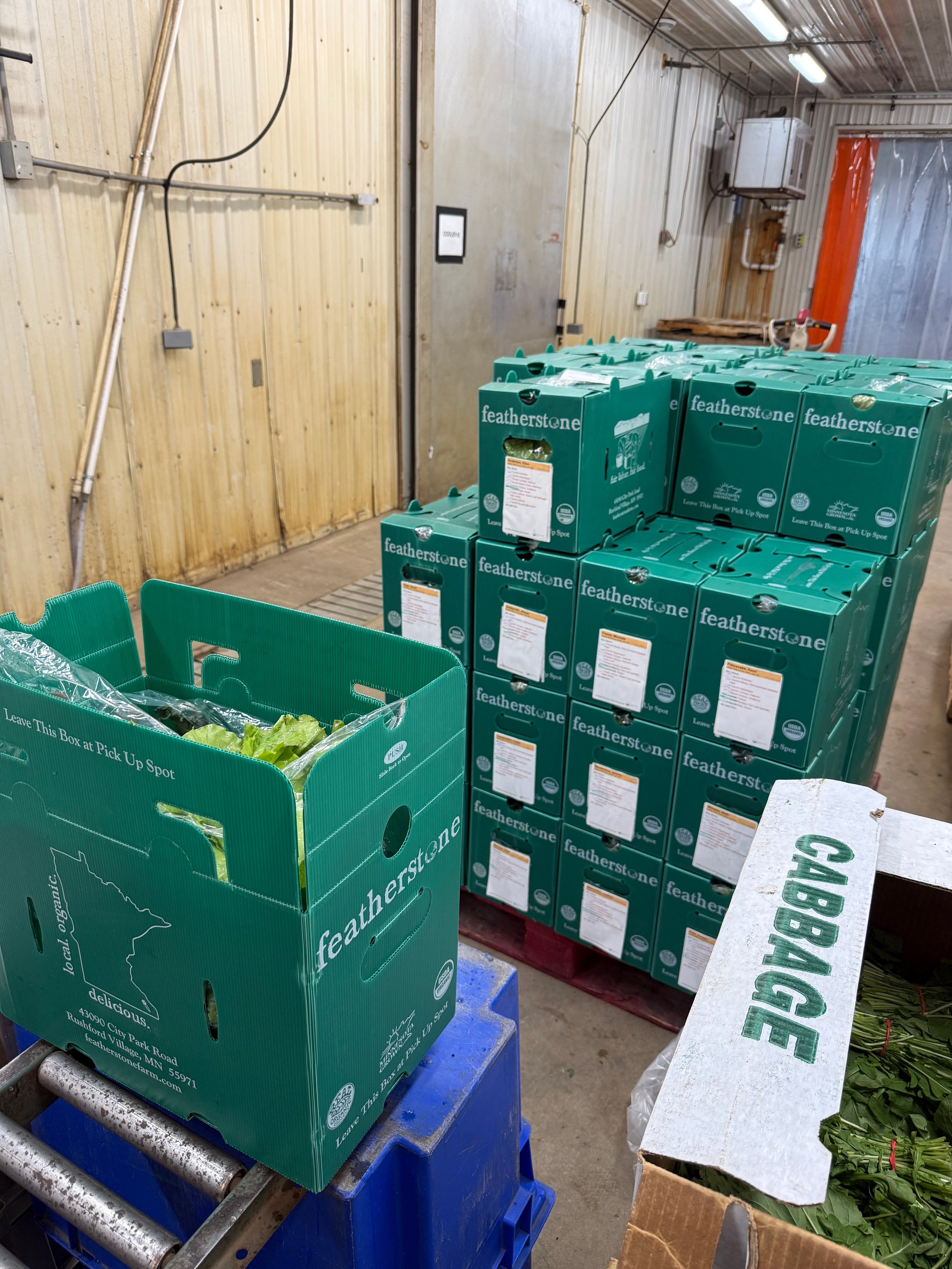
Boxes on the CSA line.
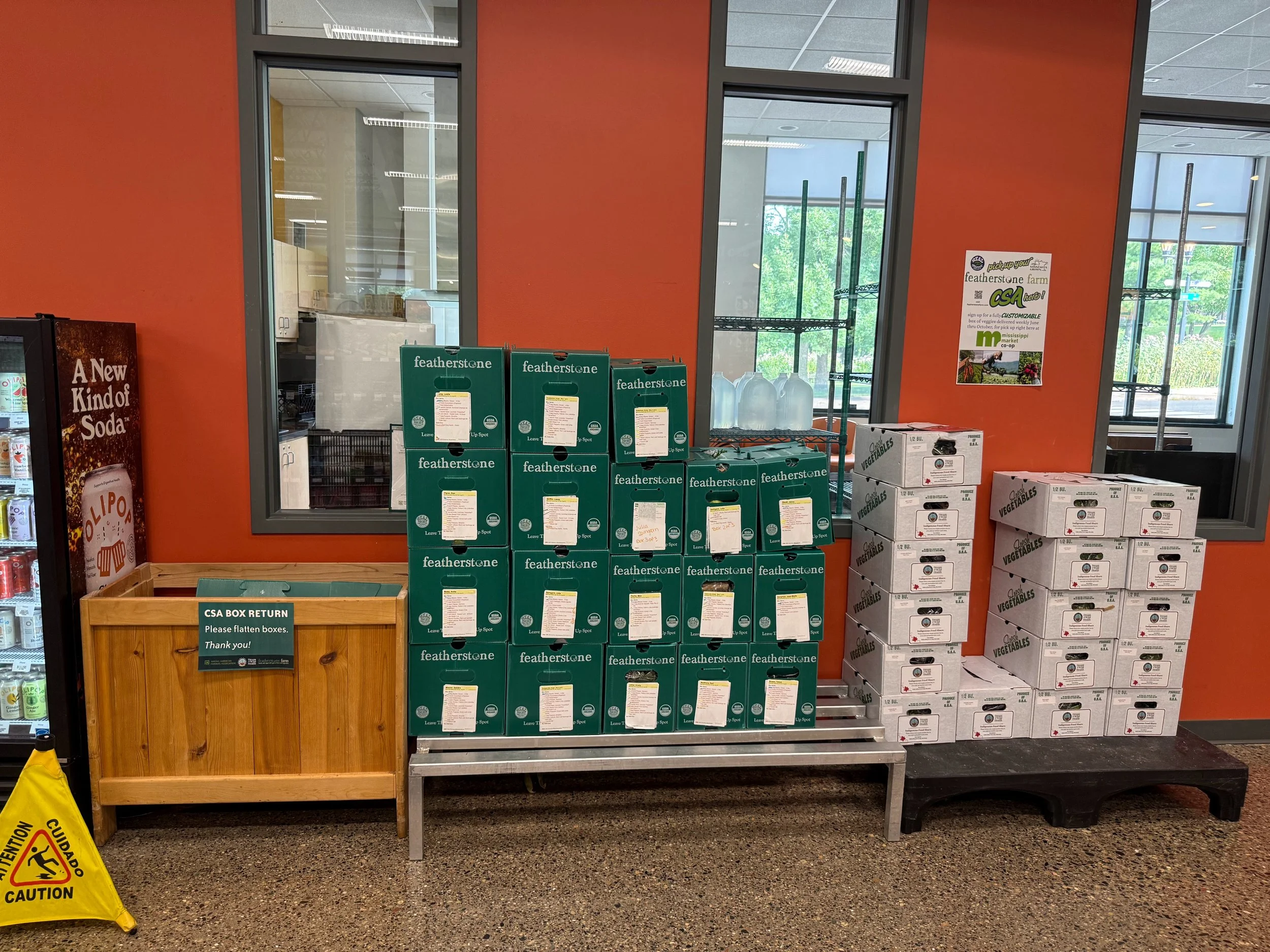
Packed CSA boxes await pick-up at a co-op in St. Paul, one of our 30+ CSA partners.
From seed to field to your kitchen, there’s a lot that goes into growing a head of lettuce. Enjoy your farm fresh salad!