
Pastured pork, with care
In 2024 our Production Coordinator Abby Benson worked with Dayna Burtness of Nettle Valley Farm to take over her pastured pork business. In 2025 that plan became a reality and we successfully raised 27 pigs on pasture over the summer and then another 3 over winter. You can read more about the beginning of our 2025 pigs here. For the 2026 season, Dayna has stayed on as a mentor and I (Molly Kelly) took on the role of Pig Lead.
Prior to coming to work at Featherstone, I spent over 10 years working in environmental education and specialized in the care and management of educational wildlife, such as reptiles, amphibians, raptors (birds of prey–not velociraptors), and a skunk. This experience has given me an unique skillset to approach the care and training of pigs. After getting to see Temple Grandin speak this winter and as we prepare for our next group to arrive, I have been reflecting on the importance of this approach to caring for our pigs.
I start implementing this as soon as our pigs arrive. When the pigs get to the farm, this looks like talking to them, moving slowly, and getting down on their level instead of towering over them like a predator would. I also immediately start feeding them treats from a bucket. This helps them both associate me with treats and helps them learn that the sound of the treats in the bucket paired with their recall (“here pig pig pig”), means that they need to come back to me.
We continue to use these basic interactions throughout the time that the pigs are here. Both groups of our 2025 pigs quickly learned that the presence of myself or the bucket was something to get excited about.
In the simplest of terms, my approach is based on building mutual trust and using the least aversive methods for care. I think of it as if our pigs have a bank account (or a piggy bank if you will) of trust, but instead of depositing money into the account you are depositing positive interactions. The more positive interactions you have, the more that account grows, and the more the pigs trust you.
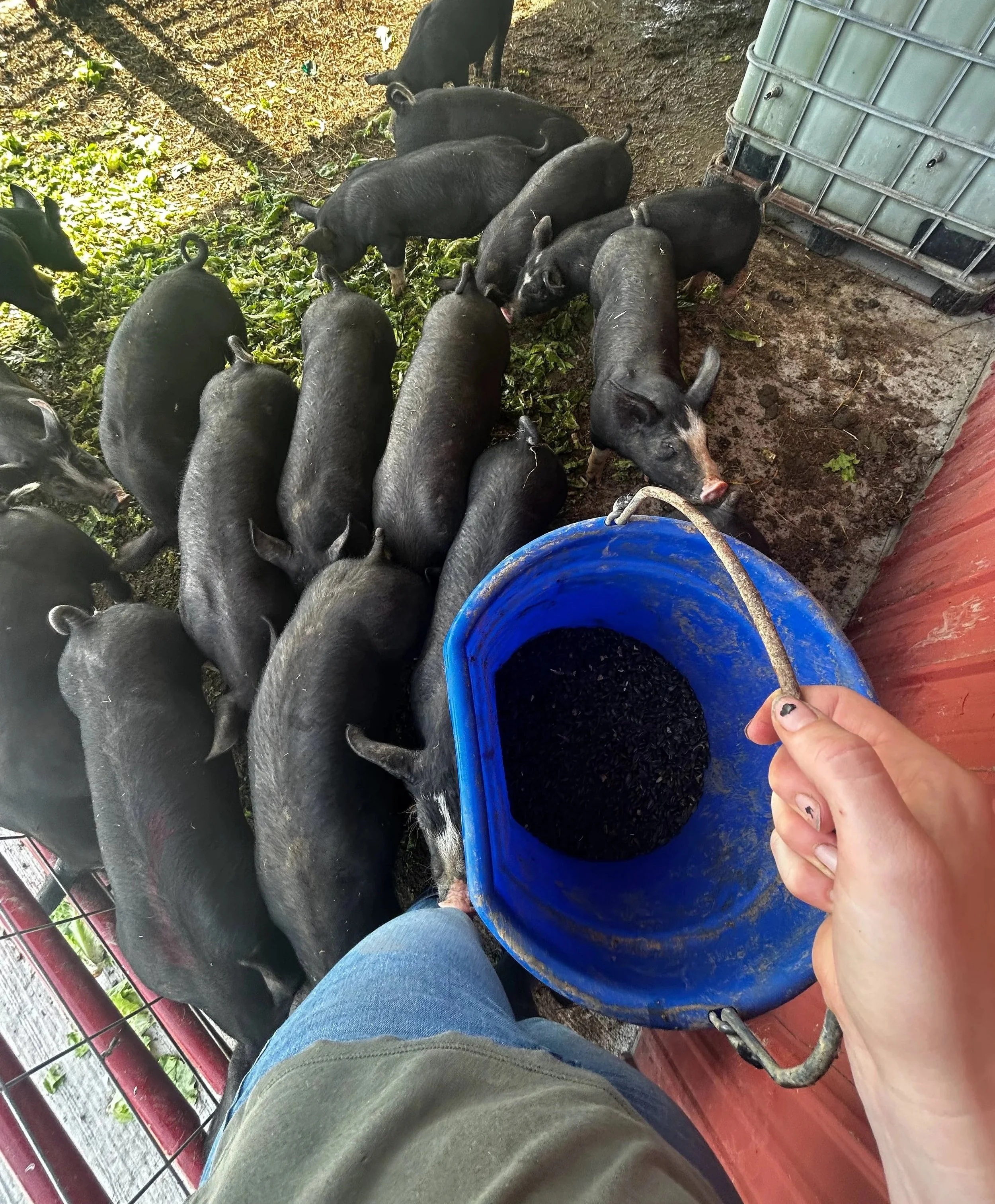
Before we put them out on pasture for the first time, we make sure that they know the bucket/recall really well, and that the electric fence is hot. This process goes surprisingly fast, and ideally the “piggy bank” is pretty full from positive interactions. Last year this was really useful as it gave them the confidence to trust me and follow me into their first real pasture, then to explore the pond, and eventually to explore the whole pasture.
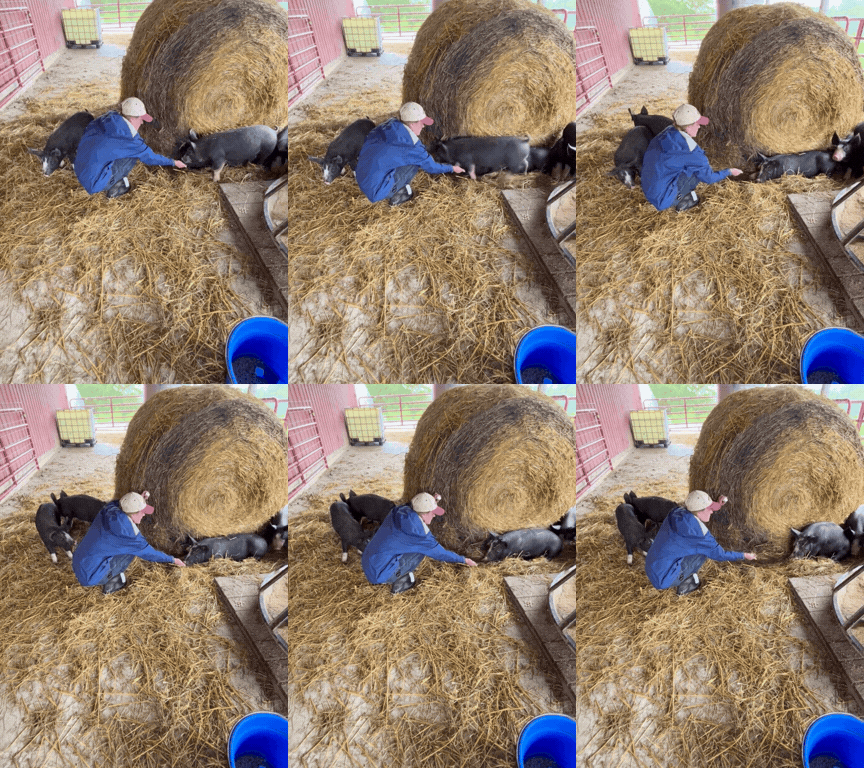
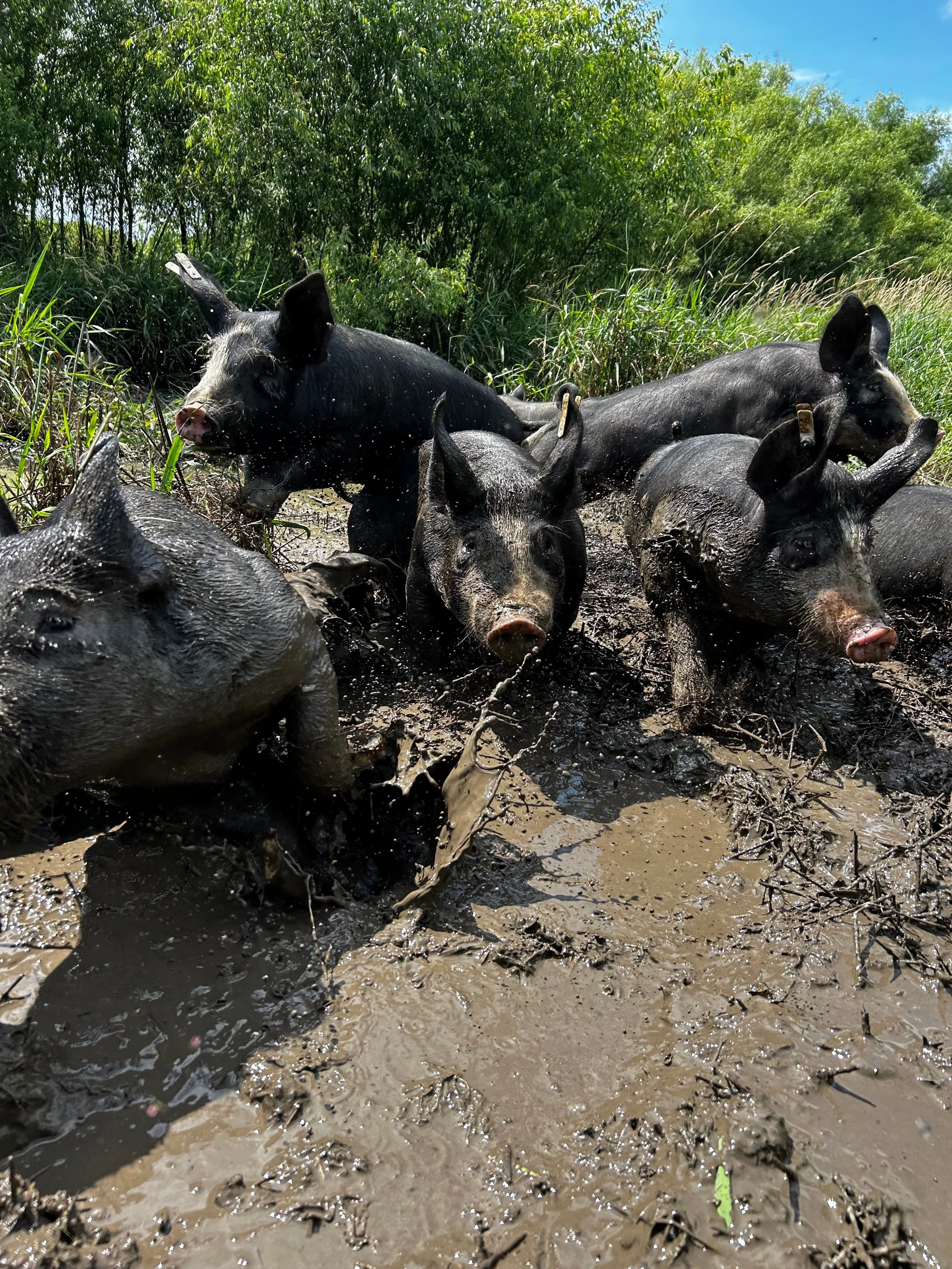
Not too long after getting our pigs out on pasture last summer, we had a pig with a prolapse and we realized that we really needed to get ear tags on them to help ID them and be able to keep better records. This was our first big event where we had to collect the pigs and expose them to a negative/painful experience. However, because I already had a pretty full trust account, I could make a “withdrawal” without any long term effects. In fact they were ready for more belly rubs pretty immediately after.
Last summer was a big learning experience with the prolapse, and then the death of 2 pigs, we decided that we needed to administer ivermectin shots to all of the group. However, since our piggy bank of trust had continued to grow, we were able to funnel the pigs into a chute system we constructed and easily administer the shots. This year, I plan to try to teach them to use the chute system right away and to get used to me handling their ears as this will be useful if we need to administer meds during their time with us.
Other than when the vet came out to help with the pig who had a prolapse, we were able to get by without using the pig holder tool. While this tool is useful for many, it requires a level of skill and confidence to use it effectively and seemed to only increase the stress of our pigs when we tried to use it. It is something we will continue to keep on hand, but our goal will be to continue to use the chute system and scale to handle the pigs.
As the season went on we continued to build up our pig’s confidence when faced with new experiences, such as having them practice walking through the scale, and eventually getting on and off the livestock trailer. We continued to use our trusty bucket filled with sunflower seeds as the reward. The busyness of our farm exposed our pigs to lots of new experiences, and they were quickly unphased by barking dogs, noisy tractors, and even chickens walking around on their backs. I believe all of this led to our success when it came to loading them onto the trailer to head off for their “one bad day.” In fact, our butcher complimented us on the demeanor of our pigs, as they unloaded calmly and stayed calm. In the case of meat quality, this is important since high cortisol levels can impact the taste of the meat, but for me as the caretaker, I’m happy to know that they left the world curious and happy.
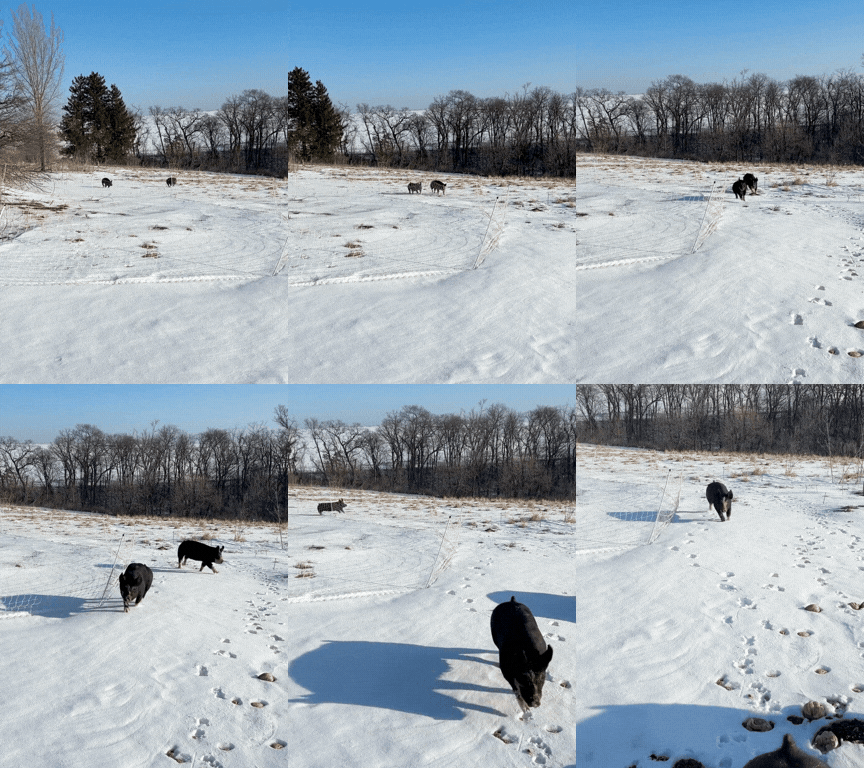
Now as I sit here writing this and reflecting on last year's pigs while simultaneously preparing for this year’s group, I am filled with gratitude for this opportunity, and so much love for these animals. Raising food for meat will likely always be controversial, but our pigs experienced so much love and joy while they were with us. As long as I am in this role, I will continue to work towards continual improvement of the quality of life of our pigs through the improvement of our systems and care, while being an advocate for humane livestock systems. If you are interested in filling your freezer with humanely raised meat, we still have pigs available for 2026. To our past and current pig customers, I am so grateful for your support. Without your support we wouldn’t be able to raise happy and healthy pigs. With deep gratitude, thank you!
-Molly Kelly