
On Saturday the 11th of April I rolled into the farm early, eager to see Gerardo, Antonio, Jose, Victor and Mote: our first group of seasonal crew who arrived overnight in a van from Mexico. Normally we wouldn’t work immediately upon their arrival, but with a rainstorm in the forecast, Saturday morning would be our key window to make beds for our first round of spring crops. After hugs and a quick catch up, we jumped into action prepping equipment. This small early group is made up of long-time returning workers who have been traveling back and forth between Guanajuato, Mexico and Minnesota for over 10 years. They are our team leads and equipment operators, the guys who know all the ins and outs of our equipment and systems. The whole vibe of the farm changes when this team arrives. Mexican music fills the air, several types of tacos are passed around every day at lunch while everyone catches up on who’s having babies, who’s sick, who built a new house. This crew is so much more than just workers on the farm. They are friends. They are family. And when they arrive, we all know it’s go-time: spring has arrived and we are ready for another season!
In mid-May we will welcome another 11 workers, lining up with the start of our spring CSA season and just in time for the heavier workload that comes with warmer weather. We’ll start harvesting from our tunnels and packing 500 CSA boxes per week while simultaneously planting summer crops and managing weeds in our early crops. In June we’ll welcome 13-15 more workers just in time for bigger wholesale harvests and the start of our summer CSA program. The timing really matters here! We started seeding in March, planting outside in April, and our customers are eager for the veggies we have promised. These crops are time sensitive and they don’t wait, so getting workers here from Mexico on time is important.
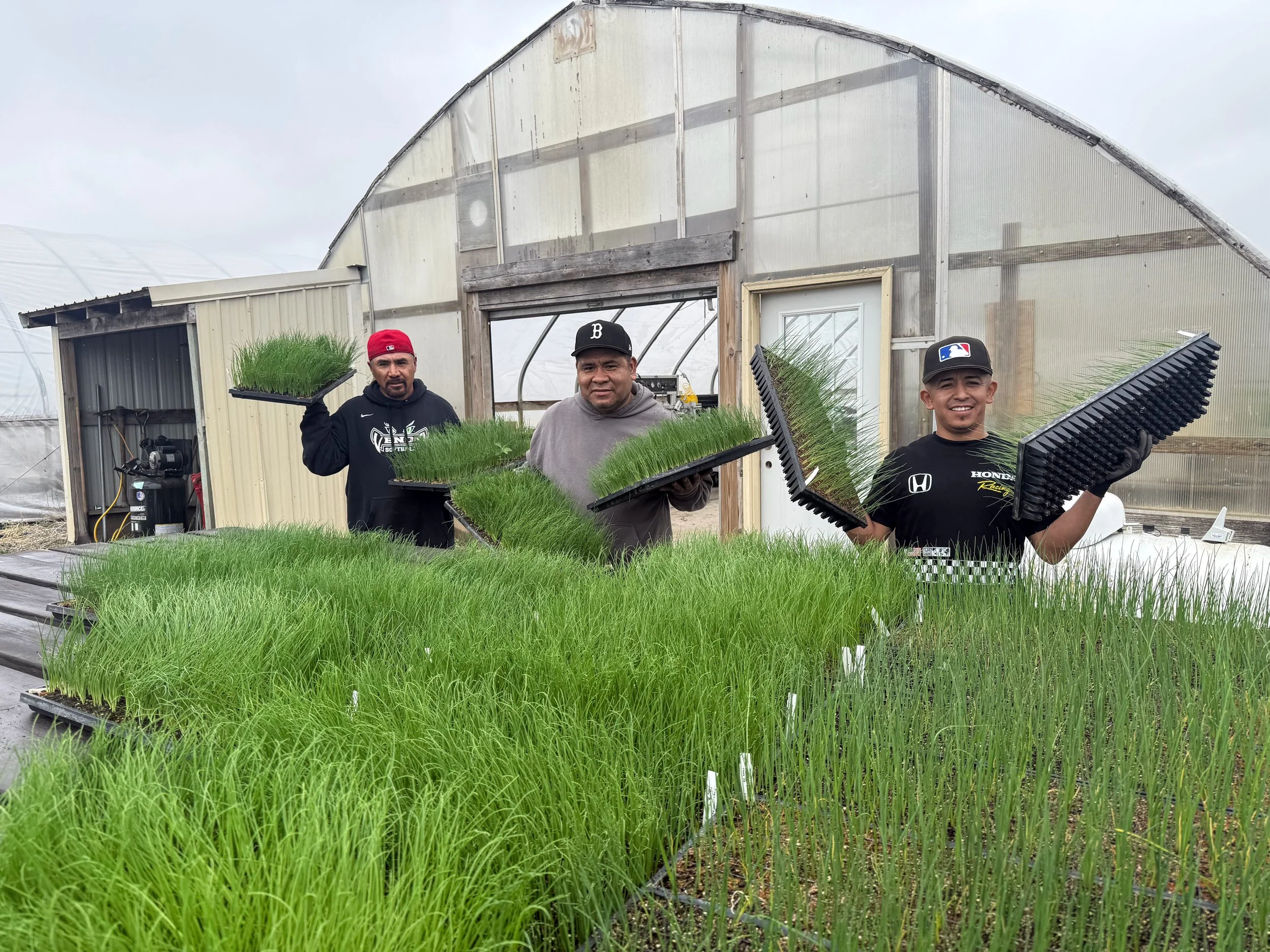
Mote, Antonio, and Gerardo loading a wagon with transplants
For us, it’s not enough to simply participate in a system that brings workers to the farm—we feel a responsibility to do it well. Farmworkers, including those in the H-2A program, can be especially vulnerable, and there are real, documented cases of abuse across the industry. That reality is something we take seriously, and it’s part of why we participate in the Fair Food Program. This program is built around the idea that workers themselves should have a voice in defining fair conditions, with clear standards for wages, safety, and respect, along with systems for accountability when those standards aren’t met. For us, that means more than checking boxes—it shapes how we approach housing, communication, problem-solving, and day-to-day working conditions on the farm. We want our crew to feel safe, respected, and heard, and we also want our customers and community to know that we’re actively working toward a model of agriculture that is not just productive, but ethical.
Stepping back, the Fair Food Program represents a different approach from many traditional certifications. Rather than relying solely on top-down audits or checklists, it’s built around the idea of “worker-driven” standards—meaning the people doing the work help define what fair conditions actually look like and have real mechanisms to raise concerns and hold farms accountable. That shift matters in agriculture, where power imbalances can be significant and where oversight doesn’t always capture day-to-day realities. Programs like this aim to create not just compliance, but a culture of respect and transparency that’s reinforced from the ground up. From our perspective, it’s a step toward a food system where responsibility isn’t just assumed or advertised but actively practiced and verified in ways that center the people whose labor makes farming possible.
Across the U.S., farms like ours face a persistent challenge: there simply aren’t enough local workers available—or willing—to take on the kind of seasonal, physically demanding work that farming requires, especially at the exact moments crops need attention. The H-2A visa program is one way farms bridge that gap, allowing us to legally hire experienced agricultural workers from other countries for a defined period of time tied to the growing season. It’s not just about filling positions—it’s about timing, scale, and skill. When planting windows are short and harvests can’t wait, having a reliable, trained crew makes the difference between crops thriving or being lost. That’s why the return of workers season after season matters so much: they come back knowing the rhythms of the farm, the standards we work toward, and the pace the season demands, bringing a level of consistency and expertise that’s hard to replace. They are highly skilled agricultural workers who are experts at their jobs.
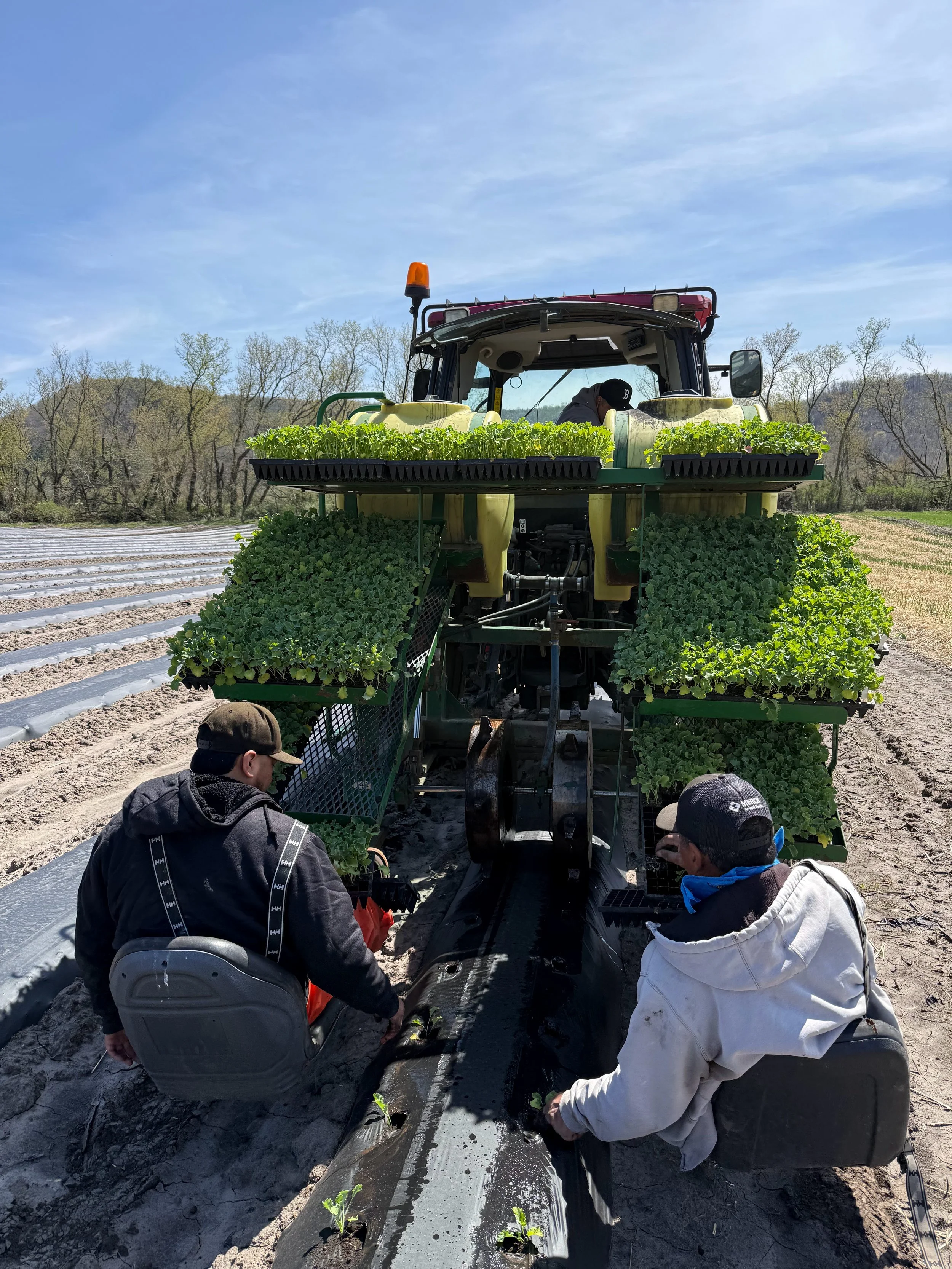
Antonio drives the tractor while Victor and Mote plant kale
Learn more about the Fair Food Program and how to get involved by visiting their website!
Behind all of this are people making significant sacrifices to be here. Coming to work in the US means leaving home, family, and daily life in Mexico for months at a time, often missing family milestones and carrying the weight of being far away while supporting loved ones from a distance. Over the years, we’ve come to understand how important stability and trust are in that context— what it means to return to a place where you know the work, the people, and what to expect, and most importantly the ability to legally go back and forth, not living in the shadows. Each shared meal, every photo of children back home, and the memories built year after year are reminders that this system isn’t abstract—it’s built on real relationships and the lives people are balancing on both sides of the border.
We know that for our customers and CSA members, this connection is really important and that you all value the direct connection between the food you eat and the people who make it possible. That is one reason so many of you choose to support Featherstone Farm rather than buying your produce off the shelf at Wal-Mart. In May some of you will start to receive your first CSA boxes, and you will know that those crops were planted, tended, harvested, washed, and packed by a skilled crew whose work shapes the quality of what you receive each week. When you hold that first bag of salad fresh from the tunnel, do so knowing that Jose Emilio planted and watered those seeds. Victor Manuel walked that bed and gave his best guess to exactly how many pounds it would yield, making sure his crew cut each plant with care to deliver the best product to your box. Mayra weighed out each bag with her crew, giving the final quality check. We believe connection matters, and that transparency is part of doing this work honestly. When you know more about who is behind your food and how it is produced, it invites a different kind of relationship with what you eat, one that recognizes the labor, care, and responsibility behind each harvest.
As I write this now, at the end of April, I’m bracing myself for the work to come over the next several months. The size of our crew will grow along with the workload. We will spend countless hours putting plants and seeds in the ground, hand weeding, harvesting, and washing. I look forward to greeting each crew in the morning with a handshake and a smile, cracking jokes on the way to prep boxes, hoes, or rain suits. It never fails to amaze me- the scale of what becomes possible when our full team arrives on the farm. Together we are able to accomplish so much and feed so many families. It really is remarkable and I am so grateful we are able to bring this crew year on year, growing organic produce for our community and supporting so many families through that labor.
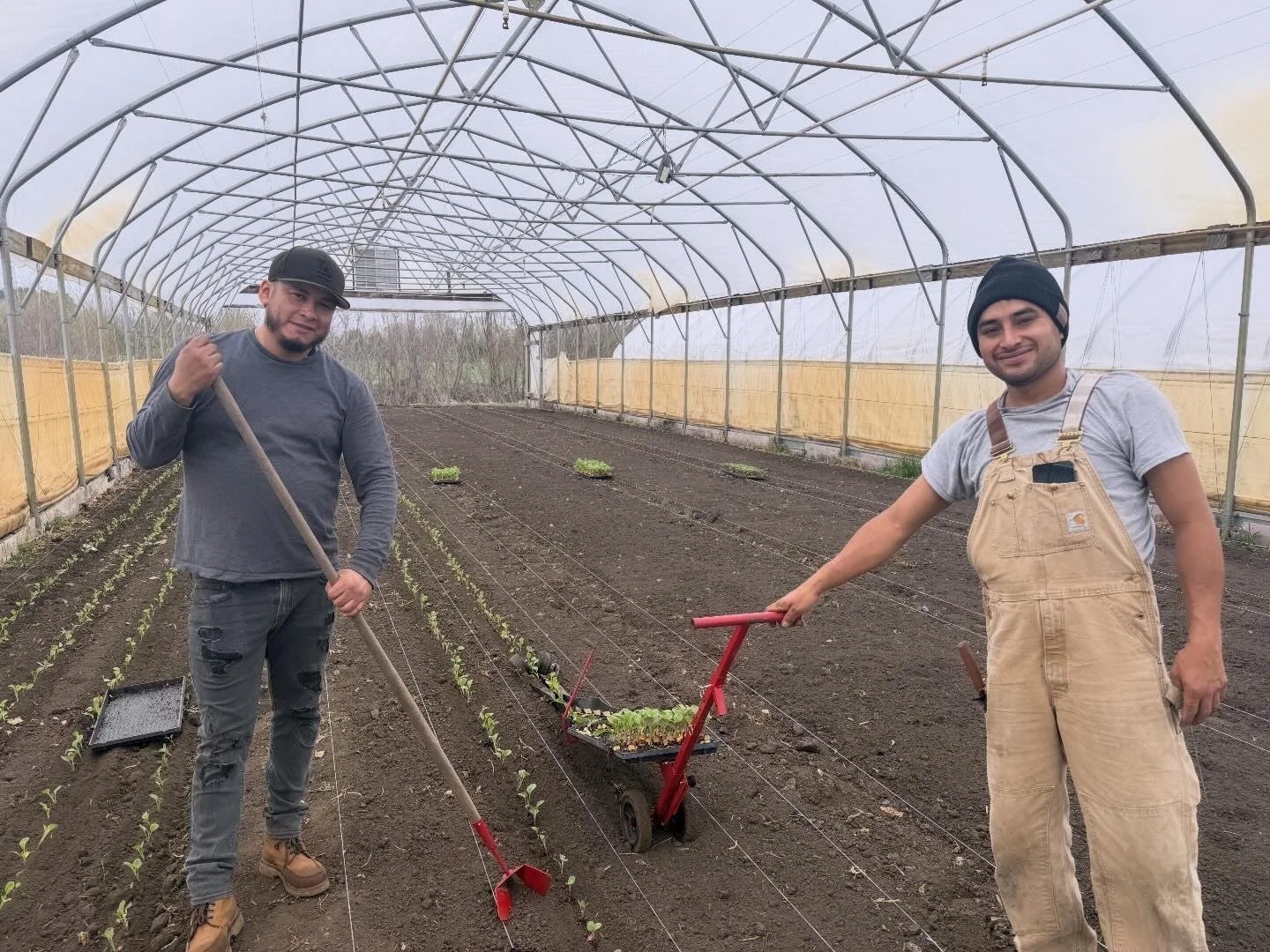
Victor and Jose planting spring tunnel crops
I know the anticipation I feel now will soon give way to long days, dirty hands, tractor breakdowns, and the familiar energy of this team working side by side. And as the fields fill in with crops, I’m reminded that it’s about more than just what we send out into the world—it’s about the people who make it all possible. Farming for me isn’t just about what we grow—it’s about who we grow it with.
~Abby